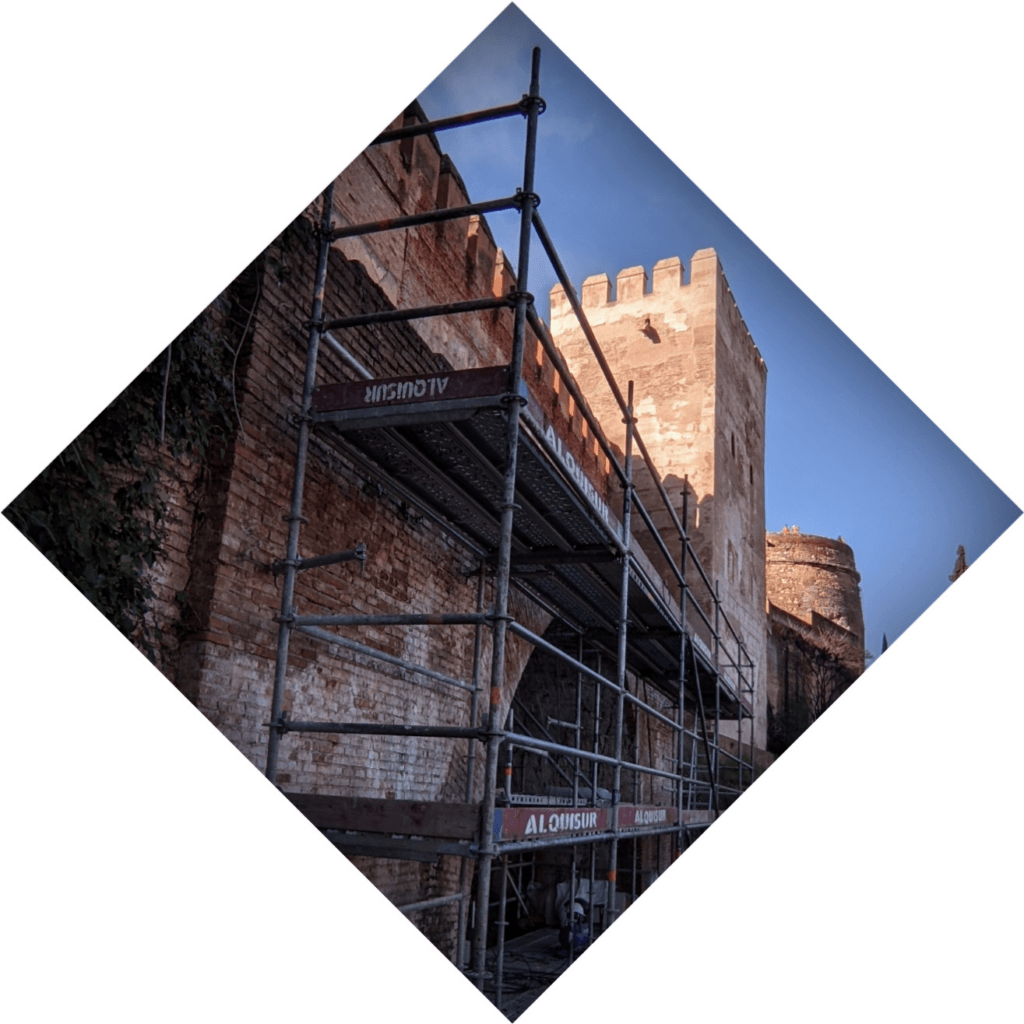
CHARACTERISATION OF HISTORICAL BUILDING MATERIALS FROM THE NORTH WALL OF THE ALHAMBRA (GRANADA)
The Alhambra is one of the most iconic architectural complexes in the western Mediterranean and a landmark of the world’s historical heritage. Built between the 13th and 15th centuries during the Nasrid period, it combines defensive, residential and symbolic functions with highly sophisticated architecture.
The northern wall forms an essential part of its defensive system, adapting to the terrain and allowing control of the surrounding area. Its materials—mortar, earth and ceramic elements—reflect both the original construction techniques and the changes and alterations it has undergone over time.
The aim of this study was to gain a better understanding of the materials used in the northern wall of the Alhambra, by analysing their composition, their role in the construction and their state of preservation. The study has provided insight into how the wall was built and how it has evolved over time, offering key information for its proper conservation.
Allowing:
- Identify the original materials used in the wall.
- Distinguish between man-made elements and natural processes of weathering.
- Understanding the cause of surface deposits and crusts.
- To support future conservation measures based on appropriate criteria.