SCIENTIFIC STUDY OF THE CHRIST OF SAN MATÍAS
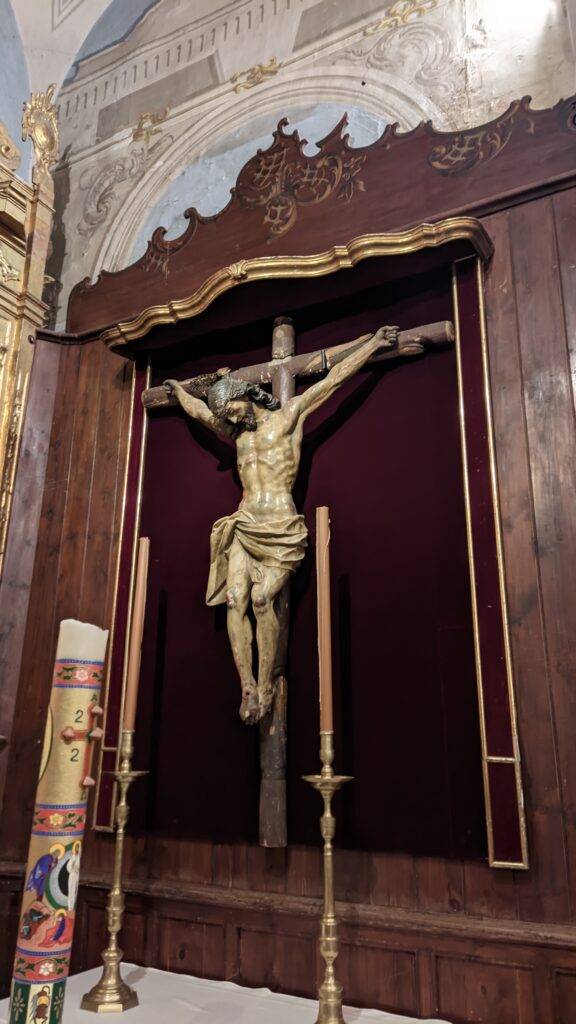
The scientific study of the Christ of San Matías carried out by TESELA has provided insight into the constituent materials and the sequence of work involved in the creation of the crucified Christ, which belongs to the Imperial Church of San Matías in Granada and is made of polychrome wood. The research was designed as a technical support tool for the conservation and restoration of the work, providing objective information on the wood, the paint layers, the pigments, the binders and the textile fibres present in the work. The scientific study thus demonstrated the importance of applying analytical techniques to further our understanding of and conservation of our historical heritage.
The results obtained provided a better understanding of the artistic technique used and offered scientific criteria for selecting conservation treatments compatible with the original materials. In this way, the analysis helped to reduce uncertainty during the restoration and facilitated an approach that respected the material history of the work.
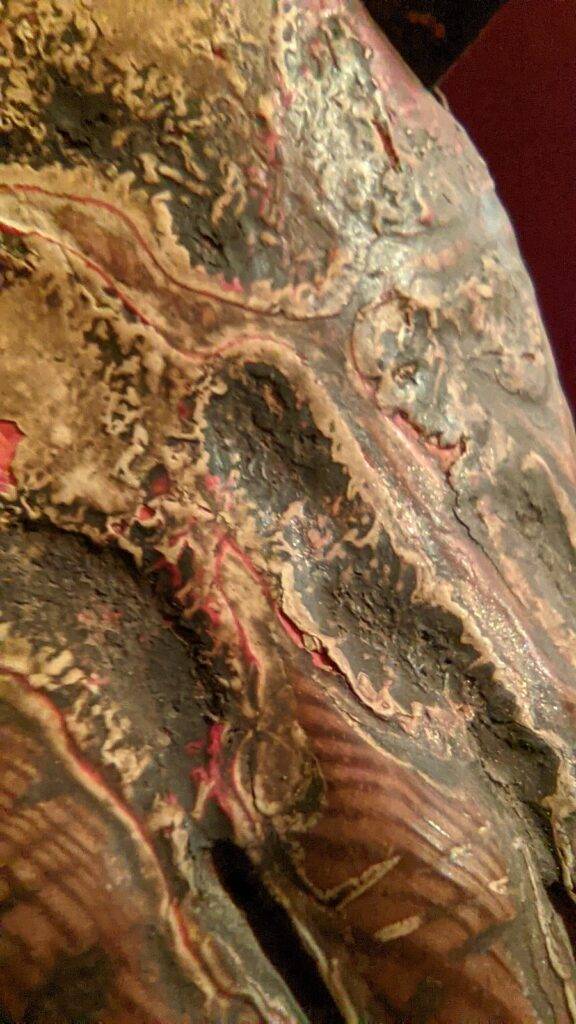
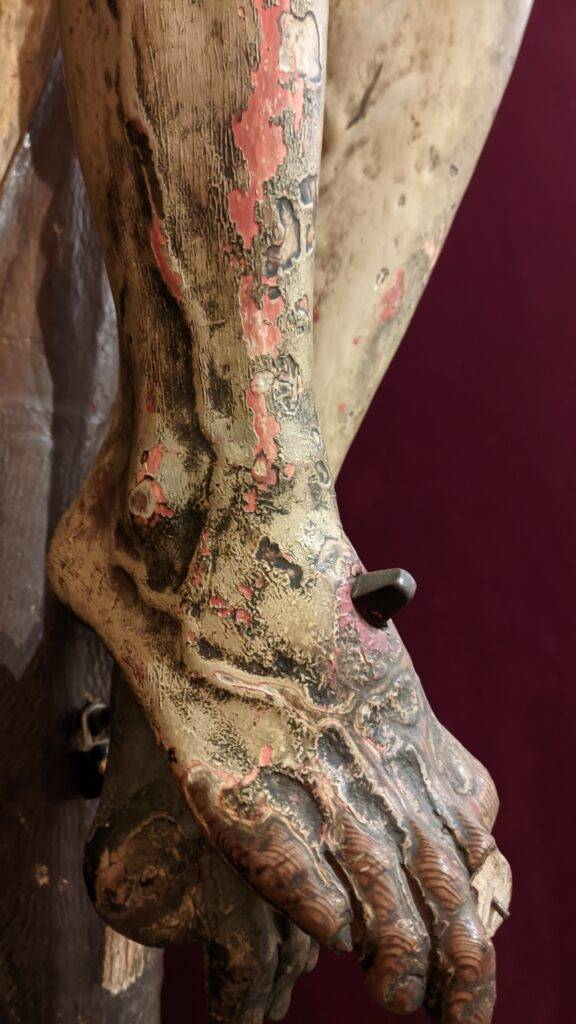
To carry out the study, various representative samples were selected from the wooden support, the flesh tones and the fabrics located beneath the polychrome paintwork. Each sample was analysed using specific techniques, chosen according to its nature and the information to be obtained. The combination of optical microscopy, SEM-EDX, GC-MS, histological analysis and fibre characterisation provided a comprehensive understanding of the materials and the technique used to create the sculpture.