


CHARACTERISATION OF HISTORICAL MATERIALS AT LA CALAHORRA CASTLE (GRANADA)
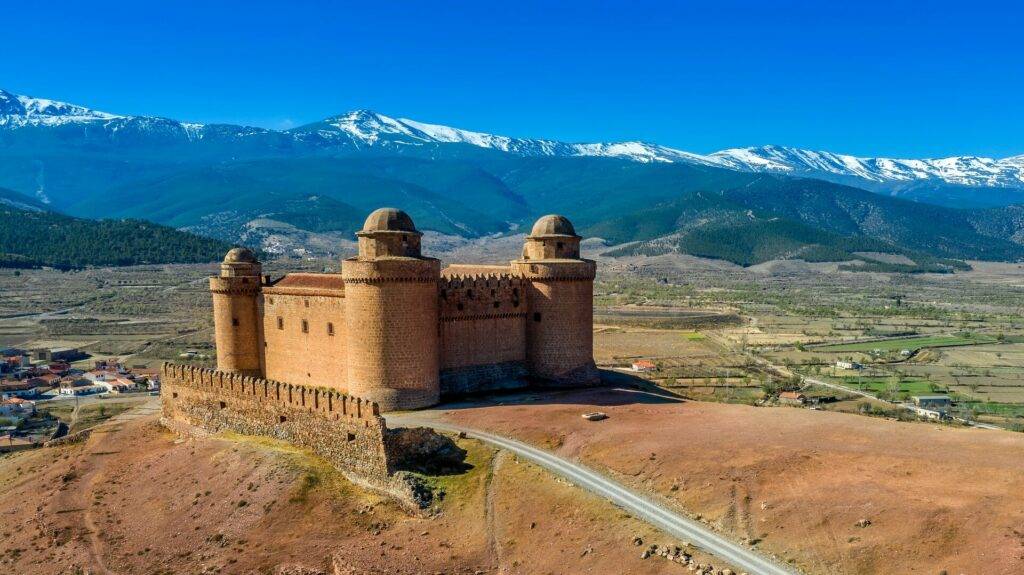
Characterisation of historical materials at La Calahorra Castle. As part of this project carried out by TESELA, a study has been conducted into the building materials used at La Calahorra Castle, a heritage site of great value situated in the province of Granada and considered one of the earliest examples of Renaissance architecture on the Iberian Peninsula.
Built in the early 16th century, this building features a unique combination of defensive exterior architecture and a refined, Italian-influenced interior design, making it an exceptional example of Spain’s historical heritage.
HISTORICAL BACKGROUND OF THE CASTLE
La Calahorra Castle represents a key milestone in the transition from medieval to Renaissance architecture. Its construction reflects a historical period of cultural and technical change, during which new architectural forms and more sophisticated materials were introduced. The analysis of the historical materials used in La Calahorra Castle provides a better understanding of this process of transformation and the way in which different building traditions were integrated into a single structure.
MATERIALS ANALYSED
The study has focused on identifying and analysing the original materials used in its construction. These include, in particular:
- Stone materials used in structural elements
- Mortars used in factories and for cladding
- Wooden components found in ancillary structures
These materials have been analysed in terms of their composition, nature and behaviour, which has provided a detailed insight into the original construction system.
STUDY RESULTS
The analysis of historical materials at La Calahorra Castle has provided important information about the construction techniques used in the building. The main findings include:
- Identification of original materials and construction phases
- Understanding 16th-century building techniques
- Assessment of the condition of the materials
- Compatibility analysis with subsequent procedures
This knowledge enables us to interpret the building’s development over time with greater accuracy.
HISTORICAL BUILDING TECHNIQUES
The study has led to a better understanding of the historical construction techniques used in the castle, revealing a combination of local tradition and Italian Renaissance influences. The characterisation of historical materials at La Calahorra Castle is key to identifying how these techniques were adapted to the geographical and cultural context of the period.
CONSERVATION AND INTERVENTION CRITERIA
One of the main objectives of the project is to assess the compatibility of existing materials with possible future works. This analysis enables:
- Reducing uncertainties in restoration processes
- To define more precise conservation strategies
- Avoid using incompatible materials
- Optimising technical decision-making
This approach helps to ensure that our architectural heritage is managed more responsibly.
COMMITMENT TO HERITAGE
Initiatives of this kind reinforce TESELA’s commitment to applying advanced technical solutions to cultural heritage. The integration of scientific knowledge and professional expertise enables the development of interventions that are more respectful, effective and long-lasting. The characterisation of historical materials at La Calahorra Castle not only provides technical knowledge, but also contributes to the preservation of a cultural asset of great historical and architectural value.
CONCLUSION
The study of the materials used in La Calahorra Castle has led to a better understanding of its construction methods, its historical development and its state of preservation. This type of research is essential for ensuring the protection of our heritage, as it provides the necessary basis for appropriate and sustainable conservation work over time.