


CHARACTERISATION OF HISTORIC MORTARS FROM THE FARILLO TOWER
Characterisation of historic mortars at the Torre del Farillo. This study analyses the building materials used in the coastal watchtower on the Granada coastline, which formed part of the historic maritime surveillance and defence system. The Torre del Farillo is part of a network of watchtowers whose main function was to monitor the territory and provide protection against maritime incursions.
These defensive structures are strategically positioned along the coast, allowing visual communication between high points and facilitating the early detection of potential threats. Their historical significance lies not only in their military function, but also in their value as a testament to traditional building techniques.
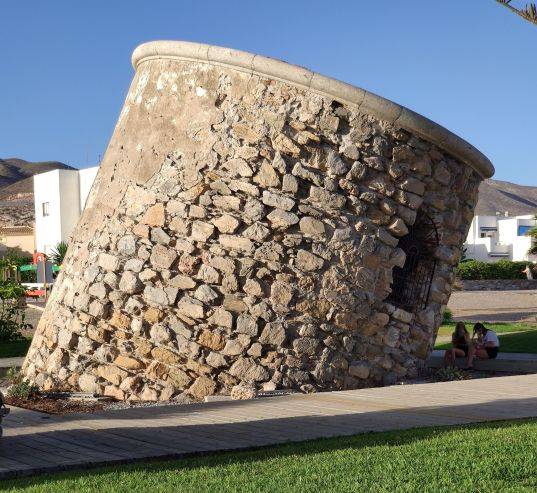
HISTORICAL AND ARCHITECTURAL CONTEXT
The Torre del Farillo has undergone various phases of construction, use and maintenance over time. These phases have left their mark on the building’s materials, particularly the mortars used in its masonry. The characterisation of the historic mortars at the Torre del Farillo provides an insight into the building’s construction history and the technical decisions taken at each historical stage. It also helps to identify subsequent alterations that have partially modified its original structure.
BUILDING MATERIALS
The study has revealed the widespread use of lime mortars as the primary bonding material. These mortars are characterised by their compatibility with local materials and their suitability for the environmental conditions of the coastal setting. A careful selection of aggregates sourced from the immediate vicinity has been observed, demonstrating an efficient use of available resources. This construction practice is characteristic of traditional architecture, where the availability of materials directly determined the technical solutions adopted.
ANALYSIS OF MORTARS
The analysis of the historic mortars at the Torre del Farillo has made it possible to identify differences between the various construction phases. The oldest mortars have a more homogeneous composition and blend in better with the original masonry. On the other hand, the more recent interventions show variations in the quality of the material and in the application techniques, although they generally remain compatible with the historic mortars.
The following aspects are particularly noteworthy:
- Predominant use of lime mortars
- Variation in the particle size distribution of aggregates
- Differences in compaction and cohesion
- Evidence of repairs carried out at a later stage
PROCESSES OF CHANGE
The environmental conditions along the Granada coastline have had a significant impact on the state of preservation of the mortars. Humidity, the effects of the sea breeze and the presence of soluble salts have led to various processes of deterioration.
The main mechanisms of alteration include:
- Crystallisation of salts within the material
- Progressive loss of cohesion
- Surface erosion caused by weathering agents
- Cracking caused by cycles of wetting and drying
These processes have a direct impact on the overall stability of the structure and must be taken into account in any future work.
CONSERVATION AND INTERVENTION CRITERIA
The characterisation of the historic mortars at the Torre del Farillo is essential for establishing appropriate conservation criteria. A detailed understanding of the original materials enables the design of compatible interventions that respect the monument’s authenticity. The use of traditional techniques adapted to current needs is essential to ensure the durability of the restoration work. Furthermore, the continued use of compatible mortars helps to prevent damage caused by unsuitable materials.
- The widespread use of lime mortars at all stages of construction.
- A careful selection of local materials and a consistent finish.
- The consistency of the most recent interventions, albeit with differences in construction quality and implementation methods.
- The changes observed in construction processes and maintenance work over time.
- The need to continue using traditional techniques, adapted to the requirements of the tower.