PREVIOUS STUDIES ON THE ISLAMIC WALL OF THE LA CASA DE LA MONEDA (SEVILLA)
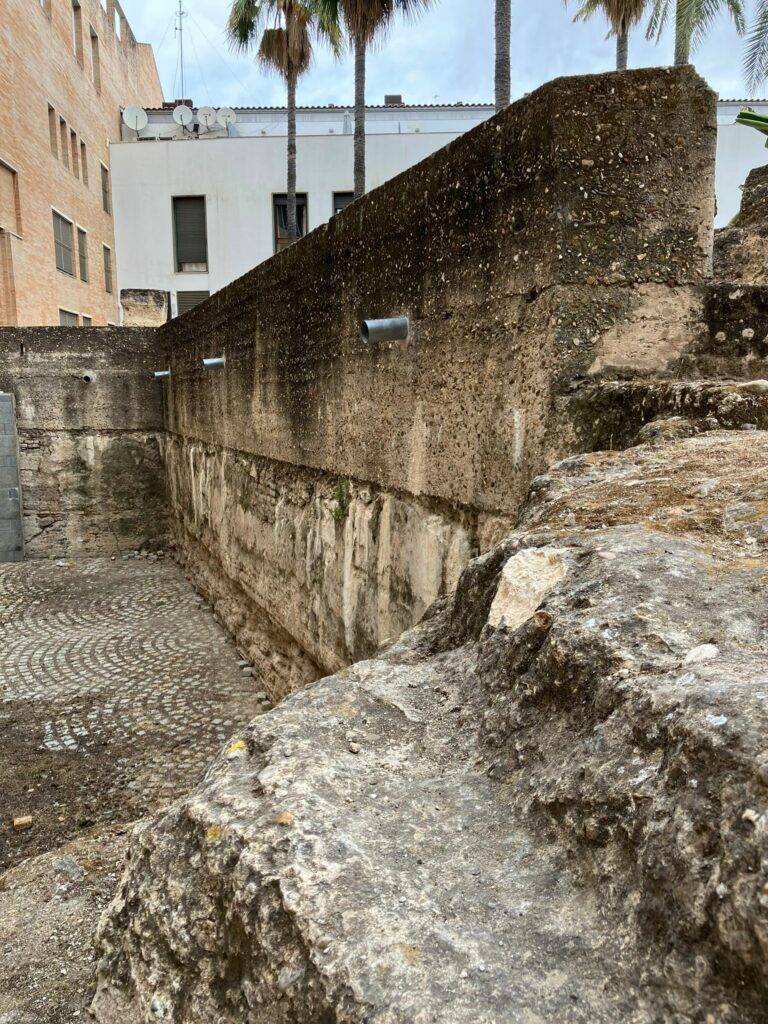
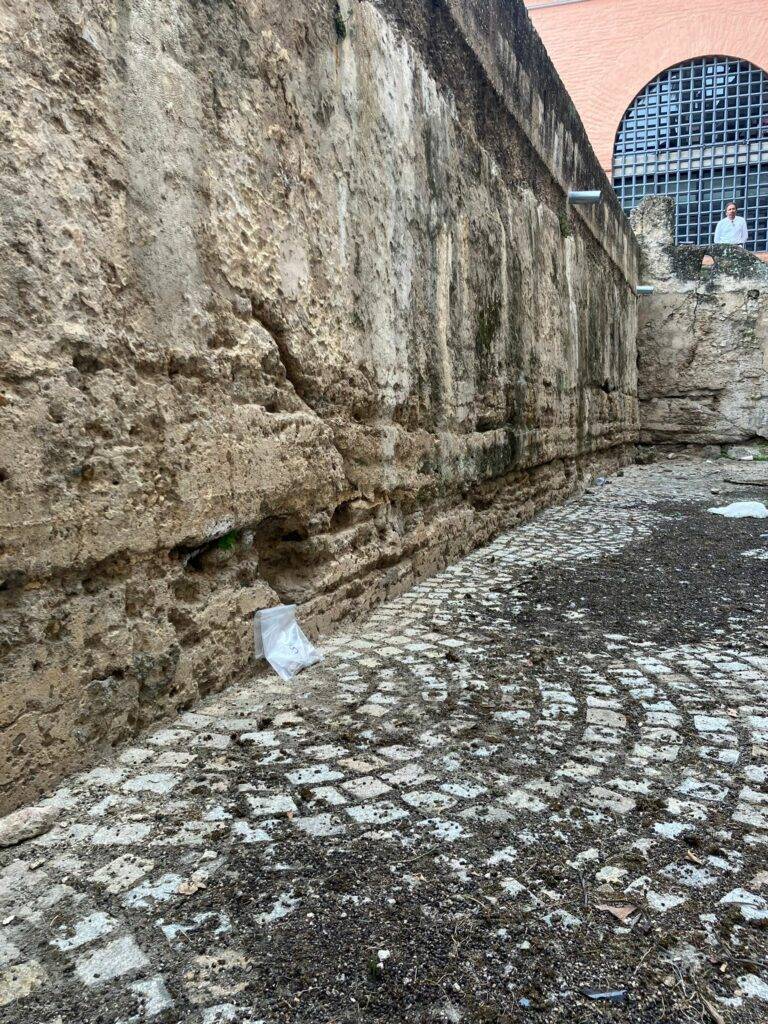
The Islamic wall at the Torre de la Plata is one of the most valuable defensive features of Seville’s historical heritage. With the aim of ensuring a rigorous and respectful approach, the TESELA team has carried out various preliminary studies to characterise the rammed earth masonry of the Casa de la Moneda wall (formerly the Corral de las Herrerías), which are essential for the future drafting of the restoration project.
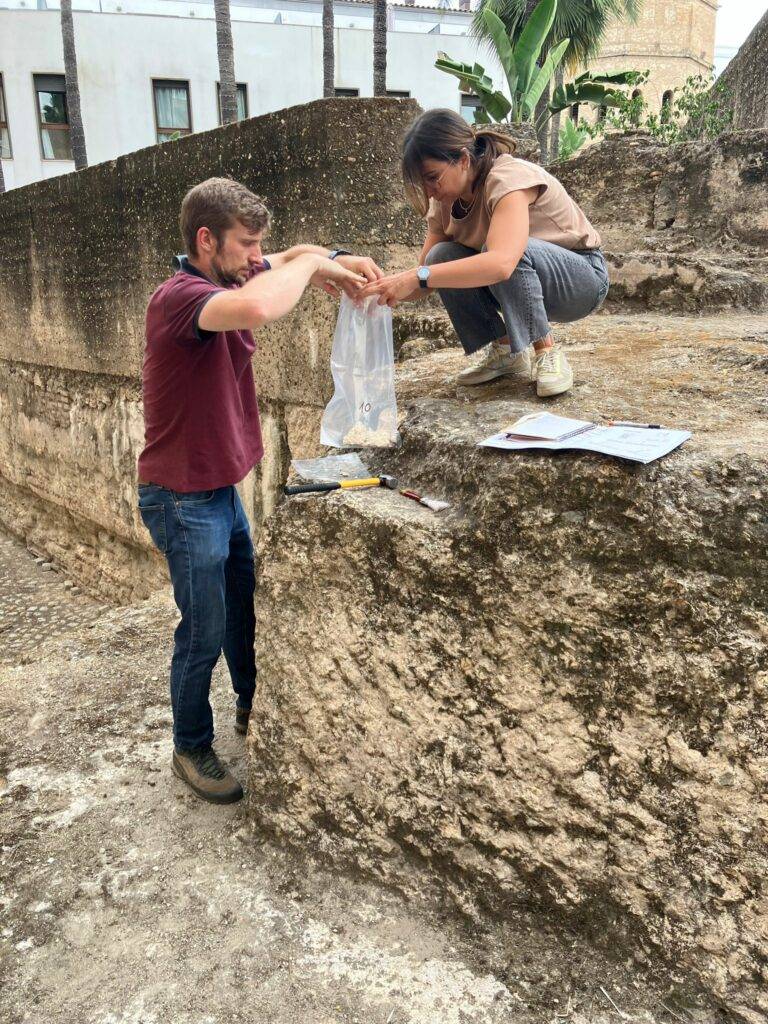
During the course of the work, samples were taken and laboratory tests carried out, which provided information on the original raw materials, their proportions, particle size distribution, porous structure and mechanical strength, as well as the presence of soluble salts responsible for moisture-related deterioration processes. Based on these analyses, treatment criteria and recommendations compatible with the historic materials have been established.
Prior to this, homogeneous sections of the wall were identified based on chronological, construction and conservation criteria, distinguishing the original masonry from later additions or restorations. Samples were taken with a view to ensuring maximum representativeness and minimum impact, both in unaltered internal areas and, where necessary, in degraded areas for the study of physical and chemical damage.
The study has been supplemented by the carrying out of test pits, accompanied by geoarchaeological interpretation, which reach down to the geological base of the site and will provide a basis for the future archaeological research project outlined in the overall action plan.
The result submitted to the authorities is a comprehensive technical and scientific report, which interprets the tests carried out and sets out criteria and techniques for the consolidation and restoration of the historic walls and cladding, thereby laying the foundations for an intervention based on a scientific understanding of the property.